
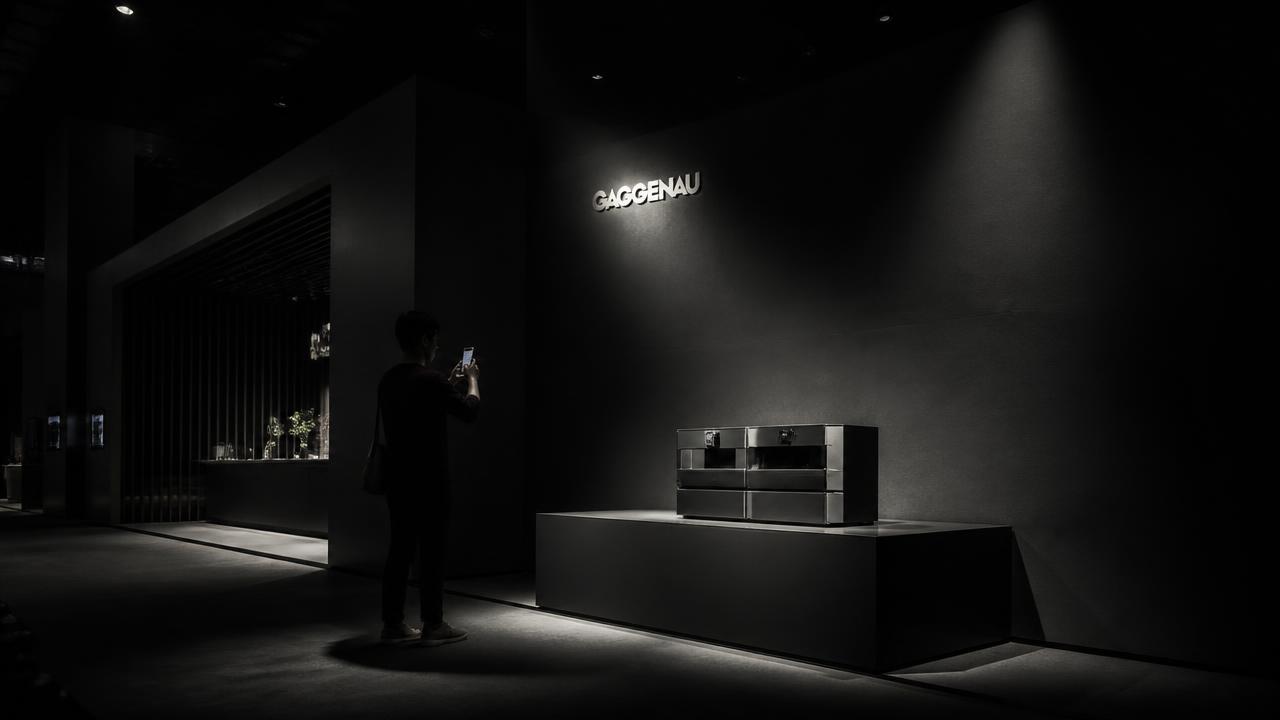
Why physical stands run out of room
Most premium products cannot travel. A yacht, a CNC line, a penthouse floorplan or a full furniture collection either does not fit on the stand or costs more to transport than the stand itself.
The usual compromise is a video wall and a printed catalogue. Both are passive: the visitor watches, nods and walks on. Nothing about the interaction tells you who they were or what they wanted.
What WebAR changes on the floor
A browser-based AR experience opens from a QR code in about three seconds — no app store, no install, no sign-up. The product appears at true scale on the stand floor, or as a 3D model above the printed brochure page.
- Show every variant, colour and layout without shipping hardware
- Let the visitor walk around the product and inspect labelled hotspots
- Hand over one URL they can reopen on the flight home
- Capture qualified interest inside the experience instead of on a paper form
A stand layout that actually converts
Put the code where the visitor already stops: on the plinth, the brochure cover, the wall panel beside the hero product. Keep one large open floor area free so world-tracked models have somewhere to land.
Brief the stand team on a single sentence: scan this, place it on the floor, and I will walk you through it. The AR experience becomes the conversation script, not a gadget.
Measure the fair, not the footfall
Because everything runs in the browser, every session is measurable: scans per day, average dwell time, which hotspots were opened, which variant was viewed most, and how many conversations ended with contact details.
That is the report that justifies next year's stand budget.